Materials and Processing: Dunlop vs Talalay
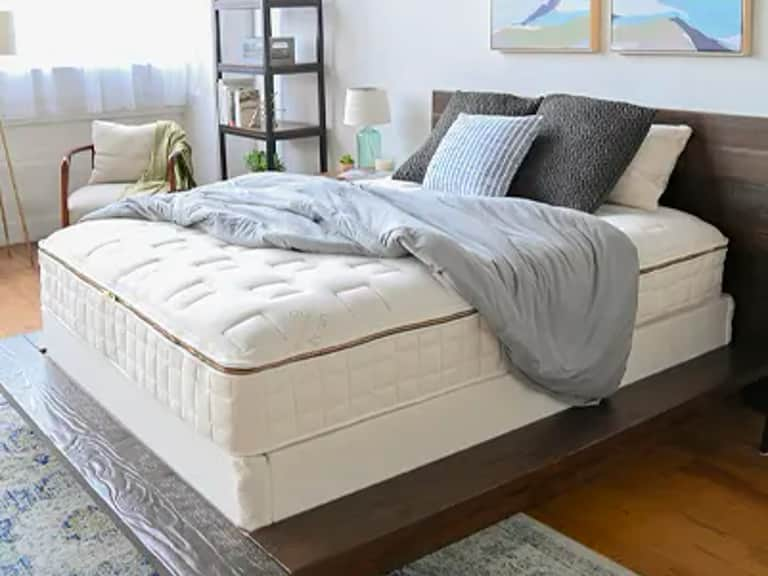
Natural latex sits at the intersection of elasticity and endurance. The essence of latex mattresses lies in the material itself—two classic processing methods shape its personality: Dunlop and Talalay. Dunlop latex tends to be denser and more supportive, with a slightly denser core that can feel firmer and more grounded. Talalay latex, by contrast, often yields a softer, more buoyant response, with a more uniform cell structure that can feel more cushiony at the surface. The choice between these two processes is rarely a monolith; many premium models blend layers, offering a curated gradient of support that aims to align with spinal curves and sleep positions.
Beyond processing, the sustainability of latex matters. Organic and certified materials—such as GOLS (Global Organic Latex Standard) or other third-party verifications—signal a commitment to transparent supply chains and responsible farming practices. The best latex mattresses speak to a quiet confidence: a product that performs without needing to shout about it.
Firmness is not a single dial but a spectrum that interacts with body weight, sleeping position, and microclimate. A properly designed latex mattress will offer a balance of buoyancy and contouring, with enough bounce to prevent the feeling of being enveloped, yet enough suppression to keep pressure points in check. For many readers, the sweet spot lies in layered constructions that combine Dunlop and Talalay in a controlled gradient, sometimes augmented with organic wool insulation to regulate temperature and wick moisture.
Comfort, Support, and Zoning: How Latex Aligns the Spine
Comfort, for the luxury mattress buyer, is a precise blend of tactile feel and ergonomic support. Latex’s elasticity allows it to respond to shifts in weight distribution without collapsing under pressure. A well-constructed latex mattress can offer zoned support—heavier, deeper zones at the hips and shoulders with firmer edges to preserve sit-up ease—while preserving a consistent feel across the rest of the surface. This zoning approach acknowledges a simple truth: the body is not a uniform silhouette, and sleep surfaces that respect variety in shape tend to provide longer-lasting alignment.
When evaluating firmness, consider your primary sleeping posture. For back sleepers, a medium-firm latex mattress that fosters even spinal alignment is often ideal. Side sleepers might gravitate toward a medium to medium-soft feel that cushions shoulders and hips without creating extra strain elsewhere. Stomach sleepers usually require a firmer surface to prevent unwanted arching of the lower back. In premium latex builds, the layering strategy offers the possibility to tailor the sensation—more surface plushness with a supportive core—so you can find your personal equilibrium.
Draped over a sturdy foundation, latex mattresses also benefit from breathability. Natural latex is inherently more breathable than many other foam types, aided by the microstructure of the latex cells and, in some cases, a wool or cotton quilted cover. Temperature regulation remains a practical consideration: a mattress that sleeps cool is not merely a luxury; it can influence sleep continuity and the avoidance of night sweats. Look for certifications and material descriptions that highlight natural fiber covers, low VOC emissions, and transparent sourcing.
Sustainability and Certifications: Reading the Fine Print
In the world of luxury bedding, sustainability is more than a color on a label. It is a chain of custody that should be traceable from forest or plantation to final product. Third-party certifications—such as GOTS for organic textiles, GOLS for organic latex, and other credibility marks—offer a baseline of accountability. Transparent labeling about the origin of latex, the treatment of wool or cotton components, and the absence of flame retardants can distinguish a conscientious maker from a marketing-driven one.
As with any premium purchase, a thoughtful buyer will read beyond the surface and into the practicalities: how the mattress holds up over time, how it responds to temperature fluctuations, and how easy it is to maintain. In latex, durability is a feature inseparable from design: a well-tended latex core can retain its buoyancy and contour for years, and a layered construction that distributes wear can extend the life of the bed far beyond a typical foam mattress.
Care, Longevity, and Everyday Rituals
Natural latex, while resilient, benefits from mindful care. Rotating the mattress seasonally helps distribute wear evenly and preserve the balance of the layers. If your latex mattress uses a zippered, removable cover, laundering according to manufacturer instructions—typically a gentle wash or spot cleaning—is a straightforward step toward longevity. Avoid exposing latex to direct sunlight for extended periods, as UV exposure can degrade the materials over time. A well-chosen protector can shield the surface from moisture and body oils, while still allowing the air to circulate around the core.
In a more practical vein, consider pairing your latex mattress with breathable bedding: natural fibers such as cotton or linen can complement the breathability of latex, while moisture-wicking sheets assist in maintaining a comfortable microclimate. Temperature regulation is not merely a matter of comfort; it is a factor in sleep architecture. When your sleep environment is conducive to stable temperature, sleep tends to be deeper and more restorative.
Pricing, Value, and the Question of Worth
Natural latex mattresses occupy a premium segment, and rightly so. The materials, the sourcing, and the craftsmanship implied by a layered, hand-finished core command a price that reflects more than a number on a sticker. Yet value is not measured solely by cost; it is measured by performance over time. A latex mattress that maintains its support, offers breathable comfort, and shows minimal sagging after years of nightly use represents a robust return on investment in sleep quality.
If you are approaching a purchase, ask about layer customization, how easily the mattress adapts to different foundations (slatted bases, adjustable bases), and whether there is a trial period that allows you to assess comfort and alignment in your own sleeping environment. The most honest warranties are those that acknowledge wear and offer paths to adjustment or replacement within a defined period, rather than vague assurances of “long-term durability.”
Key Figures Across Time: A Brief Cast
The subject of sleep, like architecture or cuisine, gains texture when seen through the lives of those who have studied, built, or dreamed it into form. Here are three individuals from distinct eras who illuminate the conversation about comfort, engineering, and the ethics of materials.
-
Henry Ford (1863–1947): A figure not commonly associated with mattresses, yet his attention to standardized production and modular design offers a lens on how late-20th-century and early-21st-century mattress manufacturers have approached layering and interchangeability. Ford’s insistence on reproducibility echoes in modern latex brands that offer modular cores or replaceable components, promoting longevity and reduced waste. The idea that a mattress system can be engineered for consistency speaks to the broader narrative of reliability that luxury buyers seek—an orderly, well-engineered sleep surface that performs year after year.
Illustrative point: durability through modular design.
-
Charlotte Perkins Gilman (1860–1935): A writer and social thinker who, through intellectual rigor and attention to everyday life, advocated for work and home environments that support well-being. In the context of luxury bedding, Gilman’s insistence on empirical observation—of environments impacting mood, health, and productivity—invites readers to evaluate mattresses not as mere indulgence but as a cornerstone of daily vitality. Her approach reminds us to balance comfort with function, aesthetics with ethics, and desire with responsibility.
Illustrative point: the sleep surface as a utility for well-being.
-
Dame Daphne du Maurier (1907–1989): Though better known for literary shadows and psychological suspense, du Maurier’s nuanced sensitivity to texture, atmosphere, and place provides a sensibility that resonates with luxury sleep culture. The tactile memory of a carefully crafted surface—be it linen, wool, or latex—becomes part of a narrative of rest. Her legacy, in this reading, is the reminder that a mattress is not merely a product but a site of personal ritual, a stage for the drama of nightly renewal.
Illustrative point: the sleep environment as an intimate, sensory space.
These figures remind us that the stories we tell about sleep are threaded through time—from industrial precision to intimate rituals. In evaluating natural latex, readers are not merely assessing a material but choosing a stance toward comfort, responsibility, and the ongoing pursuit of a better night’s sleep.